
Cat sleeping positions can offer useful clues about comfort, warmth, trust, and alertness. A single pose rarely proves exactly how a cat feels. Watching the position alongside normal behavior gives you a clearer picture.
Cats also change their posture throughout the day. Temperature, noise, nearby people, and favorite resting surfaces can all influence that choice. Sudden changes deserve more attention than an occasional unusual nap.
Quick answer: A curled cat may be conserving warmth, while side sleeping often accompanies relaxed rest. Belly-up sleeping can suggest security because the abdomen remains exposed. Loafing may allow quicker movement, while sleeping beside you can combine warmth, familiarity, and social comfort. Context matters more than any single pose.
Quick Guide to Common Sleeping Poses
| Sleeping pose | What it may suggest | What else to notice |
|---|---|---|
| Curled into a ball | Warmth and protection | Room temperature and bedding |
| Loaf position | Relaxed but ready to move | Head position and energy |
| On the side | Comfort and deeper rest | Slow, steady breathing |
| Belly up | Security and relaxation | Whether the cat remains loose |
| Sprawled out | Cooling or comfort | Warm floors or hot weather |
| Paws over face | Blocking light or staying warm | Bright room or draft |
| Upright or sitting | Light rest | Ears reacting to sounds |
| Under blankets | Warmth and security | Safe access and ventilation |
| Sleeping on you | Warmth and familiarity | Your cat’s normal social habits |
| Beside another pet | Shared warmth or social comfort | Relationship between the animals |
| High perch | Security and observation | Safe access to the perch |
| Hunched or unusually tucked | Possible discomfort if new | Appetite, movement, breathing |
What Cat Sleeping Positions Can Tell You
Feline sleep posture reflects several needs rather than one fixed emotion. PetMD notes that warmth, environmental security, alertness, and social behavior can affect how cats rest. Those factors often overlap during the same nap.
That is why posture works best as one piece of information. Compare what you see with your cat’s habits, appetite, movement, and interaction. A familiar pose in a familiar place usually matters less than a sudden behavioral change.
1. Curled Into a Ball
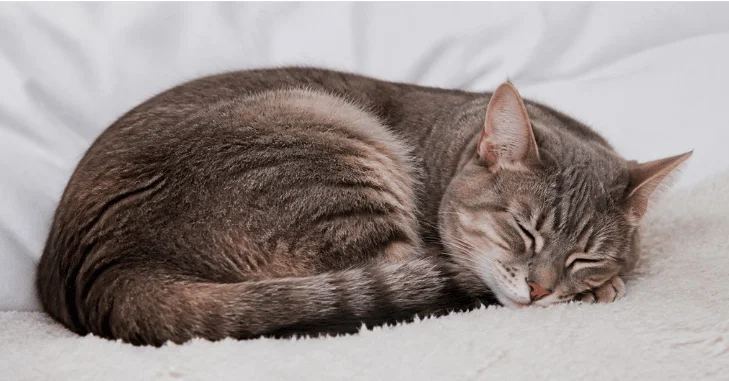
A tightly curled cat keeps the abdomen protected and reduces exposed body surface. This shape can help conserve warmth during cooler conditions. It also creates a compact resting position that many cats naturally prefer.
The position does not automatically mean fear or anxiety. A comfortable cat may curl up simply because the room feels cool. Soft circular beds often suit cats that regularly choose this shape.
2. The Cat Loaf
In the loaf position, the paws sit underneath the body. The posture lets a cat rest without fully stretching vulnerable areas. Purina describes loafing as relaxed resting that can still allow awareness of nearby activity.
A normal loaf usually comes with a comfortable face and relaxed body. The cat may open its eyes quickly when something interesting happens. A hunched appearance combined with low energy deserves closer observation.
3. Sleeping on the Side
Side sleeping exposes more of the body than a tight curl. Cats commonly choose it when they feel comfortable enough to relax their posture. PetMD also associates side sleeping with security and relaxation.
You may notice small paw movements or whisker twitches during sleep. Those movements can occur during normal sleep cycles. A relaxed cat should still wake and move normally afterward.
4. Sleeping Belly Up
A cat resting on its back leaves the abdomen exposed. That vulnerable position often appears when the surroundings feel safe and comfortable. Both PetMD and Purina describe belly exposure as a common sign of relaxation.
The pose does not necessarily invite a belly rub. Many cats still protect that sensitive area when touched. Treat the posture as a resting choice rather than automatic permission for handling.
5. Sprawled Across the Floor
A stretched body exposes more surface area to the surrounding air. Cats may sprawl more during warm weather or on cooler flooring. The position can also appear during deeply comfortable rest.
Notice where the cat chooses to stretch. Tile, hardwood, and shaded spaces may feel cooler than thick bedding. A relaxed sprawl by itself usually does not indicate a problem.
6. Paws Covering the Face
Some cats sleep with one or both paws over their eyes. The position can reduce light and may help cover part of the face. It can also happen when the cat curls naturally during sleep.
Avoid assigning a complex emotional meaning to this pose alone. Check whether the room is bright, cool, or drafty. Small environmental details often explain simple sleeping habits.
7. Sleeping Upright
Cats sometimes doze while sitting with their feet beneath them. This posture allows them to react quickly to sounds or movement. It is usually a lighter rest than a fully stretched sleeping position.
Ears may continue turning toward nearby noises. The eyes can also remain partly closed during a light nap. Your cat may switch positions once the environment becomes quieter.
8. Sleeping Under Blankets
Blankets can provide warmth, darkness, and a sheltered place. Some cats regularly seek covered spaces because they feel comfortable there. Others prefer open beds and rarely burrow.
Make sure your cat can enter and leave freely. Heavy bedding should never restrict movement or airflow. A sudden increase in hiding should be judged alongside other behavior changes.
9. Sleeping on You
Your body offers warmth, a familiar scent, and a predictable resting surface. Purina lists warmth among several reasons cats choose to sleep on people. Familiarity may also make your lap, chest, or legs appealing.
This habit does not have one universal meaning. Some social cats seek close contact more often than others. Your cat’s normal personality provides the best comparison.
10. Sleeping Beside Another Pet
Cats that rest beside familiar animals may benefit from shared warmth. Close sleeping can also occur when household animals are comfortable around each other. The exact distance often depends on their individual relationship.
Do not force animals to share sleeping spaces. Give each pet separate beds and escape routes. Voluntary closeness is more meaningful than proximity created by limited options.
11. Sleeping on a High Perch
Elevated locations give cats a broad view of nearby activity. A shelf, cat tree, or window perch can also reduce interruptions from people or other pets. Many cats naturally prefer resting above floor level.
The sleeping surface should remain stable and easy to reach. Older cats may need lower steps or easier access. Changes in jumping ability can sometimes indicate discomfort.
12. Hunched or Unusually Tucked Sleeping
A newly hunched position deserves more attention than a normal loaf. VCA notes that illness can produce changes in posture, energy, sociability, and sleeping habits. Pain can also cause unusual positions or difficulty getting comfortable.
Look for several changes together rather than diagnosing from posture alone. Appetite loss, hiding, reduced movement, poor grooming, or breathing changes add important context. Persistent changes should be discussed with a veterinarian.
When a Sleeping Position May Signal a Health Problem
Cats often hide discomfort, so behavioral changes can appear before obvious symptoms. Sleeping more, hiding, changing locations, or repeatedly repositioning can accompany illness or pain. VCA recommends paying attention to sudden changes from your pet’s normal pattern.
Keeping a simple record can make those changes easier to explain. GetGoodRead’s guide to working with veterinarians to keep pets healthy emphasizes routine observation and communication. A short log of sleep, appetite, bathroom habits, and activity can provide useful context.
Long-term conditions can also alter normal habits gradually. GetGoodRead explains how veterinary clinics manage chronic pet conditions through monitoring, testing, and treatment adjustments. Slow changes can matter even when your cat never seems acutely ill.
Urgent changes need faster action. Difficulty breathing, collapse, severe weakness, or inability to wake normally warrants prompt professional attention. GetGoodRead also outlines the value of 24/7 animal hospital access when concerning symptoms appear outside regular hours.
How to Read Your Cat’s Sleep More Accurately
Start by learning your cat’s ordinary routine. Notice favorite rooms, preferred temperatures, common nap times, and usual sleeping companions. That baseline makes meaningful changes easier to recognize.
Next, look at the whole cat rather than the pose alone. Consider appetite, grooming, litter-box habits, mobility, breathing, and social behavior. A sleeping position becomes more informative when those details support the same pattern.
Finally, avoid treating internet interpretations as diagnoses. Veterinary evaluation is appropriate when changes persist or appear with other symptoms. Choosing a provider you trust can make future health questions easier to address.
Frequently Asked Questions About Cat Sleeping Positions
What do cat sleeping positions mean?
Cat sleeping positions can reflect warmth, comfort, security, alertness, and physical needs. No single posture provides a complete emotional or medical diagnosis. Your cat’s normal routine and accompanying behavior matter more. For a closer look at this, see Sleeping Cat.
Why does my cat sleep curled into a ball?
Curling can reduce exposed body surface and protect the abdomen. That makes the shape useful for conserving warmth and resting comfortably. PetMD lists heat conservation among the common reasons for this posture.
Why does my cat sleep on its back?
Back sleeping leaves the abdomen exposed. Cats often choose this posture when they feel comfortable enough to relax their protective stance. It does not automatically mean they want their stomach touched.
Why does my cat sleep on me?
Your body provides heat, a familiar scent, and physical contact. Purina notes warmth as a common reason cats choose people as sleeping places. Individual personality also affects how often a cat seeks that closeness.
Is the loaf position a sign that my cat is sick?
A loaf is common and often normal. Concern rises when the posture becomes unusually hunched or appears with lethargy, appetite changes, hiding, or movement problems. Those combined changes deserve veterinary advice.
When should I worry about a new sleeping position?
Pay attention when a new posture persists or appears alongside other changes. VCA lists altered sleep, hiding, lower energy, breathing problems, and appetite changes among possible illness signals. Your veterinarian can assess whether the change needs treatment.
The Most Useful Clue Is a Change From Normal
Sleep posture can help you understand how your cat uses warmth, security, and space. It works best when you compare today’s behavior with your cat’s established routine. One unusual afternoon nap rarely tells the whole story.
Watch patterns instead of trying to decode every pose. Note persistent changes and bring concerning combinations to your veterinarian. Consistent observation gives you a better signal than any single sleeping position.

