
Philodendron Splendid combines dramatic velvet foliage with the growth habit of a climbing tropical plant. It performs best with bright indirect light, airy soil, warmth, and a sturdy climbing support. Give those basics consistently, and its new leaves can become progressively larger and more striking.
Direct answer: This plant grows best in bright indirect light, warm temperatures, and a loose, fast-draining potting mix. Water after the upper layer begins drying, then let excess water escape completely. Give the climbing stem a moss pole or similar support to encourage stronger growth and larger mature leaves.
Quick Care Overview
| Care factor | Recommended approach |
|---|---|
| Plant type | Climbing hybrid philodendron |
| Parentage | Philodendron verrucosum × Philodendron melanochrysum |
| Light | Bright, indirect light |
| Water | Water after the upper mix begins drying |
| Soil | Air, moisture-retentive, fast-draining aroid mix |
| Humidity | Moderate to high humidity |
| Temperature | Warm, stable indoor conditions |
| Support | Moss pole, plank, or sturdy trellis |
| Fertilizer | Light feeding during active growth |
| Pet safety | Keep away from cats and dogs. |
| Difficulty | Intermediate |
What Is Philodendron Splendid?
Philodendron Splendid is a cultivated hybrid between P. verrucosum and P. melanochrysum. The International Aroid Society cultivar registry records Keith Henderson as its originator. It also records 1990 as the cultivar’s release year. The plant combines characteristics associated with both velvet-leaf parents. Mature foliage is dark green, elongated, heart-shaped, and noticeably soft in appearance. Contrasting lighter veins make established leaves especially distinctive.
New leaves may show reddish or bronze tones before they darken. The undersides can retain warmer reddish coloring as the foliage matures. These traits help distinguish the plant from many common green philodendrons.
It is also an active climber rather than a compact, self-heading plant. Its stem naturally benefits from something vertical to grip. Giving it support can make a major difference in its mature appearance.
Core Care Requirements
Successful care depends more on consistency than complicated routines. Strong indirect light, suitable moisture, and an airy root zone matter most. A climbing structure then helps the plant express its mature growth habit.
1. Give It Bright, Indirect Light
Choose a bright location without exposing soft leaves to harsh afternoon sun. An east-facing window can work well in many U.S. homes. Bright rooms near filtered south or west windows can also be suitable. Too little light often produces slower growth and wider gaps between leaves. The plant may also use water more slowly under dim conditions.
University of Minnesota Extension notes that inadequate light can produce leggy indoor growth. Strong direct sun creates a different problem. Tender philodendron foliage can scorch after sudden exposure to intense sunlight. Move plants toward stronger light gradually instead of making an abrupt change.
A grow light can supplement weak winter daylight in northern regions. Position it according to the manufacturer’s output and distance guidance. Watch the plant’s growth instead of relying only on a fixed schedule.
2. Water-Based on the Potting Mix
Check the growing medium before reaching for your watering can. Water when the upper layer has started to dry. Then soak the mix thoroughly and allow excess water to drain. Avoid leaving the pot standing in collected water. Constantly saturated roots receive less oxygen and become more vulnerable to problems. A drainage hole is therefore essential for reliable indoor care.
Your watering frequency will change throughout the year. Warm rooms and brighter summer conditions usually increase water use. Cooler temperatures and shorter winter days often slow drying. Don’t follow a rigid weekly schedule. Feel the potting mix and observe the plant instead. This simple habit prevents many common moisture mistakes.
3. Use an Airy Aroid Potting Mix
Dense garden soil is a poor choice for this climbing tropical. Its roots need moisture, but they also need oxygen. A loose indoor mix helps provide both. A practical mix can combine quality potting soil with orchid bark and perlite. Coco chips or similar chunky materials can add more structure. The finished mix should drain freely without becoming bone-dry immediately.
Container size matters as much as soil texture. An oversized pot holds unused moisture around a small root system. Move up only one reasonable pot size when repotting becomes necessary. Look for roots circling densely or emerging through drainage holes. Extremely fast drying can also signal a crowded root system. Those signs matter more than a fixed repotting calendar.
4. Provide Warm Temperatures and Steady Humidity
This plant prefers the stable warmth found in comfortable indoor spaces. Protect it from cold windows, air-conditioning vents, and sudden temperature drops. Consistency helps tender new leaves develop without unnecessary stress. Higher humidity can support cleaner leaf development. Steve’s Leaves recommends humidity around 60 percent or higher for this cultivar.
Average household humidity may still support growth when watering and light remain appropriate. Don’t sacrifice airflow for humidity. Crowding plants inside stagnant enclosed spaces can create other problems. Gentle air movement and sensible spacing keep foliage healthier.
A room humidifier can help during dry U.S. winters. Place it near the growing area rather than directly against the foliage. Clean the unit regularly to prevent mineral buildup and mold problems.
Why a Moss Pole Makes Such a Difference
This hybrid grows as a climber, so vertical support matches its natural habit. A moss pole, plank, or sturdy trellis keeps the stem upright. Support can also encourage progressively larger foliage as the plant matures. Place the support when repotting whenever possible. This reduces the risk of damaging established roots later. Position the main climbing stem close enough for aerial roots to reach it.
Secure the stem gently rather than tying individual leaf stalks. Soft plant ties work better than thin wire. Check them as the stem thickens to prevent constriction. A slightly moist moss pole can encourage aerial-root attachment. It should not keep the entire pot permanently wet. Treat pole moisture and root-zone moisture as separate care decisions.
Feeding for Healthy Growth
Fertilizer supports growth when light and watering are already appropriate. It cannot compensate for poor conditions. Feed during periods when the plant is actively producing new leaves. A balanced houseplant fertilizer used at reduced strength is a reasonable starting point. University of Minnesota Extension suggests gentle feeding during active spring growth. Always follow the specific product’s label instructions.
Reduce feeding when growth slows significantly. Excess fertilizer can leave salts in the potting mix. Occasional thorough watering helps flush soluble buildup through drainage holes.
Common Problems and What They Usually Mean
Most visible problems are clues rather than diagnoses. Check light, moisture, roots, temperature, and pests together. Changing several conditions at once can make troubleshooting harder.
| Symptom | Possible cause | What to check first |
|---|---|---|
| Yellow lower leaves | Excess moisture or normal aging | Soil moisture and drainage |
| Brown crispy edges | Dry air or inconsistent watering | Humidity and watering pattern |
| Small new leaves | Weak light or no climbing support | Light level and support |
| Long spaces between leaves | Insufficient light | Distance from window or grow light |
| Pale or scorched patches | Excess direct sun | Afternoon sun exposure |
| Drooping plant | Dry mix or stressed roots | Root-zone moisture |
| Stalled growth | Low light, cool conditions, or root stress | Light, temperature, and roots |
Spider mites can become troublesome on velvet foliage. Inspect leaf undersides and growing points regularly. Early detection makes pest control much easier.
Wipe nearby hard surfaces and isolate an affected plant when possible. Choose any treatment according to its label directions. Recheck the plant because one application may not solve an established infestation.
How to Encourage Larger Leaves
Large leaves come from mature climbing growth, not from fertilizer alone. Good light gives the plant energy to maintain stronger foliage. Vertical support lets the stem continue its natural climbing pattern. Keep environmental changes gradual. Repeated drying, soaking, scorching, or chilling interrupts steady development. Stable conditions usually produce better results than aggressive care.
Don’t remove healthy older leaves simply to redirect energy. Those leaves still contribute through photosynthesis. Remove leaves when they are badly damaged, diseased, or naturally declining. Patience matters because leaf size changes over successive growth points. A young plant will not immediately resemble a mature specimen. Focus on improving each new leaf rather than chasing instant size.
Is This Philodendron Toxic to Cats and Dogs?
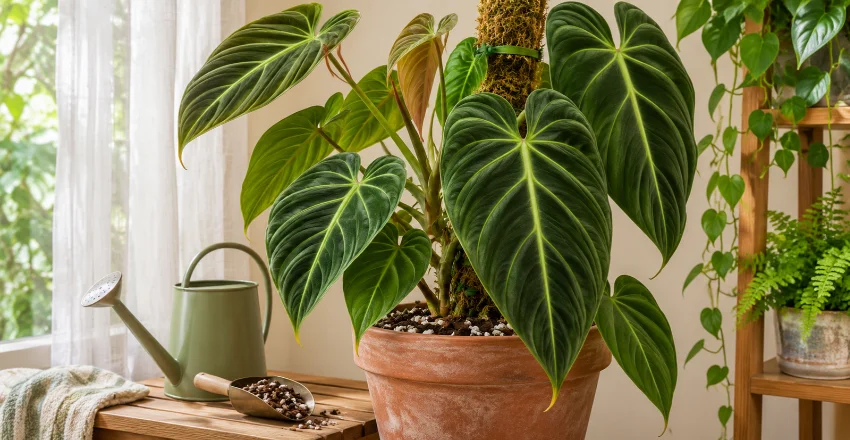
Yes, philodendrons should be kept away from pets that may chew plants. The ASPCA identifies philodendrons as containing insoluble calcium oxalate crystals. Exposure can cause mouth irritation, drooling, vomiting, and difficulty swallowing. Place the plant where pets cannot reach fallen or attached foliage. Remember that a climbing specimen becomes more accessible as stems spread. A tall shelf alone may not remain safe once the plant matures.
Contact a veterinarian if a pet chews the plant and develops concerning symptoms. Serious breathing or swallowing difficulty needs prompt professional attention. Don’t rely on online home remedies for an active exposure.
Is Philodendron Splendid Difficult to Grow?
It fits best in the intermediate-care category. The plant isn’t unusually complicated, but it dislikes repeated extremes. Moisture balance and climbing support require more attention than many beginner houseplants. Growers who already manage pothos or common philodendrons will recognize much of the routine. The biggest adjustment is providing stronger support and steadier humidity. Velvet leaves also benefit from gentler handling.
Start with light and watering before buying extra accessories. Those two conditions influence most indoor growth problems. Add humidity support only when your environment clearly needs it.
Frequently Asked Questions
How much light does Philodendron Splendid need?
It prefers bright indirect light for steady indoor growth. It can tolerate less light, but growth may become slower and smaller. Harsh direct afternoon sun can damage tender foliage.
How often should I water it?
There is no universal number of days between waterings. Check whether the upper potting mix has begun drying before watering again. Seasonal conditions can change the interval considerably.
Does it need a moss pole?
A moss pole isn’t the only possible support, but vertical support is strongly recommended. A plank or sturdy trellis can also work. Climbing support helps the plant develop a more mature growth habit.
Why are my plant’s new leaves getting smaller?
Poor light and lack of support are two common causes. Root stress or inconsistent watering can also reduce growth quality. Check the entire growing setup before adding more fertilizer.
Can Philodendron Splendid grow in normal household humidity?
It can adapt to many indoor homes, especially with stable care. Higher humidity may improve leaf development and reduce crispy edges. Avoid creating stagnant conditions while trying to increase humidity.
Is this philodendron rare?
Availability varies by nursery and season in the United States. Current U.S. sellers list plants at widely different sizes and prices. Buy based on plant health and seller reliability rather than a rarity label.
Final Care Checklist
A healthy plant doesn’t require a complicated routine. It needs suitable light, measured watering, airy roots, warmth, and something sturdy to climb. Watch each new leaf because growth quality reflects your conditions. Use a moss pole or similar structure early. Keep the potting mix damp enough for growth without leaving it saturated. Adjust watering as seasons and indoor light levels change.
Keep the plant inaccessible to pets and inspect its velvet foliage for pests. Make one care adjustment at a time when problems appear. That approach makes it easier to see what the plant truly needs.

