
If you searched Dracarys, you probably want the famous command explained without a long detour. The word means “dragonfire” in High Valyrian and commands dragons to breathe fire. It became closely associated with Daenerys Targaryen in Game of Thrones.
Quick answer: The famous High Valyrian term means “dragonfire.” In Game of Thrones, Daenerys uses it as a command telling her dragons to breathe fire. The word later takes on a broader symbolic meaning, representing Targaryen power, destruction, defiance, freedom, and the dangerous consequences of overwhelming force.
| Key fact | Explanation |
|---|---|
| Literal meaning | Dragonfire |
| Language | High Valyrian |
| Best-known speaker | Daenerys Targaryen |
| Practical use | Commanding a dragon to breathe fire |
| Pronunciation | Roughly “drah-KAH-ris” |
| Famous final use | Missandei says it before her execution |
| Broader symbolism | Power, defiance, destruction, and Targaryen identity |
| Franchise connection | Game of Thrones and the wider Targaryen story |
What Does Dracarys Mean?
The direct meaning is “dragonfire” in High Valyrian, the fictional language connected with old Valyria. Daenerys uses the word when she wants one of her dragons to release fire. In that context, it sounds like an English command such as “breathe fire.”
The distinction between translation and function matters here. The term is not simply the High Valyrian verb for “burn.” It names dragonfire, while its repeated use turns it into a recognizable command.
This difference explains why several translations appear online. Fans sometimes describe the command as “burn them” or “light them up.” Those phrases explain its effect rather than its strict literal meaning.
Where Does the Word Come From?
High Valyrian belongs to the fictional cultures created for George R.R. Martin’s fantasy world. Linguist David J. Peterson expanded the language extensively for HBO’s television adaptation. The resulting vocabulary gave characters a more consistent spoken language on screen.
Language-focused references also highlight an interesting spelling detail. The constructed language normally uses k rather than the English letter c. For that reason, linguistic references may present the form as “drakarys.”
Most American viewers still recognize the franchise spelling with a c. That spelling dominates entertainment coverage, searches, merchandise, and everyday fan discussions. Both forms therefore appear online for understandable reasons.
How Is the Word Pronounced?
A practical English pronunciation is “drah-KAH-ris.” The middle syllable receives the strongest emphasis. Actors may produce small differences because accents and performance choices affect pronunciation.
The command works dramatically because its rhythm is short and forceful. It does not need a long sentence to communicate its purpose. Viewers hear the word and immediately expect flames.
That simplicity helped make it memorable beyond dedicated fantasy fans. People can recognize the sound without speaking High Valyrian. Few fictional-language terms have achieved similar mainstream familiarity.
Why Does Daenerys Use the Command?
Daenerys trains her dragons to connect the word with breathing fire. That makes the term practical inside the story rather than decorative fantasy vocabulary. A distinctive command also reduces the chance of a dragon reacting to ordinary conversation.
The command becomes important as Daenerys gains control over her growing dragons. Early scenes often connect fire with her struggle against people who exploit or threaten others. Later scenes complicate that relationship morally.
Her use of dragonfire eventually represents both liberation and destruction. The same weapon can defeat brutal enemies or kill people with little defense. That tension becomes central to her character arc.
The command also reinforces her connection to House Targaryen. Dragons give the family political power that ordinary armies cannot easily match. For more television and celebrity coverage, readers can browse GetGoodRead’s Entertainment section.
The Astapor Scene Made the Command Iconic
One of the defining early moments occurs during Daenerys’s confrontation with Kraznys mo Nakloz in Astapor. He assumes she cannot understand the insulting Valyrian comments made around her. She eventually reveals that assumption was completely wrong.
Daenerys then turns the situation against the slave master. Drogon responds to her command, and the confrontation erupts. The scene connects dragon power with Daenerys’s identity as the Breaker of Chains.
That moment also gives the word an emotional association with freedom. Missandei witnesses the collapse of the system that controlled her life. This history becomes important much later during Missandei’s final scene.
Fantasy television often builds memorable moments through language, costume, and performance together. Readers exploring other screen traditions can also see GetGoodRead’s guide to Italian actors and international film stars. That guide offers another look at how performance shapes popular culture.
Why Did Missandei Say It Before She Died?
Missandei’s final word arrives during Season 8, Episode 4 of Game of Thrones. She stands as Cersei Lannister’s prisoner while Daenerys watches from outside King’s Landing. Cersei gives her a final opportunity to speak before the execution.
Missandei chooses the dragonfire command rather than asking for mercy. The message is directed at Daenerys rather than any nearby dragon. Series commentary describes it as an instruction to strike back.
Her choice also carries personal history. She first followed Daenerys after events that ended her enslavement in Astapor. The same word associated with that liberation becomes her final expression of defiance.
This connection gives the moment more weight than a simple request for revenge. Missandei is again standing in chains when she says it. Her last word recalls the power that once helped break those chains.
What Does the Command Symbolize?
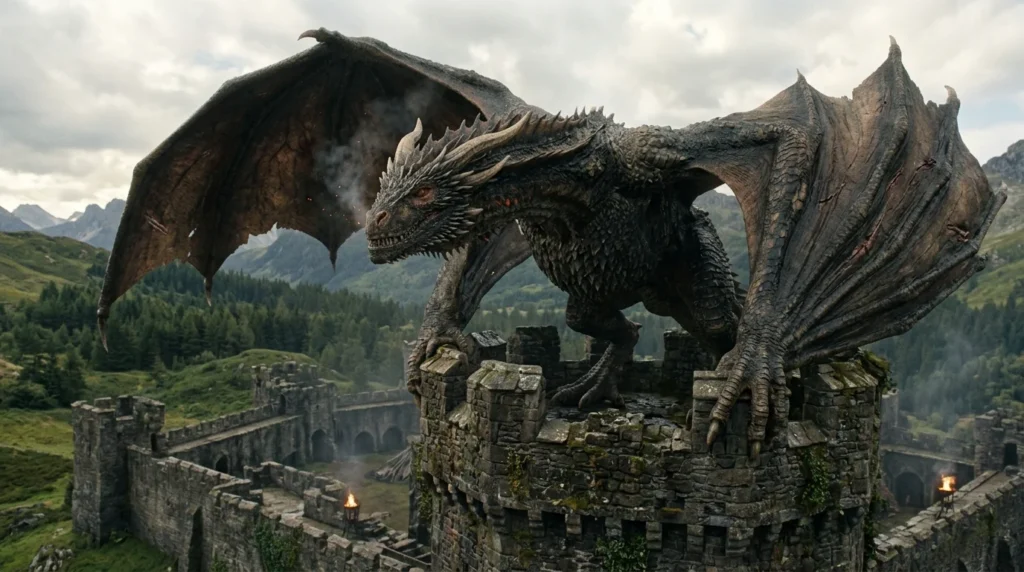
At first, dragonfire can feel like a symbol of freedom against cruel rulers. Daenerys repeatedly confronts people who rely on fear, slavery, or inherited power. Fire provides a dramatic way to overturn those systems.
Yet the series refuses to keep that symbolism simple. Destructive power remains destructive even when its owner believes the cause is righteous. The consequences become harder to defend as the story approaches its ending.
The command therefore acquires several meanings at once. It can represent liberation, vengeance, authority, rage, and catastrophic violence. The speaker’s goal and the target determine which meaning dominates.
That complexity helps explain why fans still discuss the term years after the original series ended. It is attached to major choices rather than random dialogue. The command tells viewers that someone has decided words are no longer enough.
How the Word Connects to House Targaryen
Dragons are inseparable from Targaryen history. The family’s political strength originally depended heavily on creatures that could overwhelm conventional armies. High Valyrian language strengthens that connection with their lost ancestral homeland.
The command therefore sounds larger than one character. It evokes Valyria, dragon riders, conquest, and generations of Targaryen history. That association also makes it relevant to stories set before Daenerys’s lifetime.
House of the Dragon places dragon riders much closer to the center of the story. Viewers see a society where multiple powerful families understand dragon warfare. The command fits naturally within that older Targaryen setting.
Fantasy fans often move between television, movies, and games. GetGoodRead’s Gaming section offers more entertainment-related reading. The wider site also covers current pop culture and general-interest topics.
Is It a Real Language Word?
The answer depends on what “real” means. High Valyrian is a constructed language, not a naturally evolved historical language. Linguists still give constructed languages grammar, vocabulary, pronunciation rules, and internal consistency.
That means the term has a defined meaning inside an intentionally designed language system. It was not discovered in an ancient Valyrian manuscript because Valyria is fictional. Its linguistic structure still goes beyond meaningless fantasy sounds.
Constructed languages have a long history in books, film, and television. Writers use them to make fictional cultures feel more coherent. Fans can study these languages well beyond the dialogue they hear on screen.
How Fans Use the Word Today
Outside the franchise, fans sometimes use the command jokingly after a devastating comeback or dramatic victory. In those settings, nobody expects an actual dragon to appear. The reference works because audiences understand the association with overwhelming firepower.
Online, it can also mean “burn it down” figuratively. Someone might use it after a character takes decisive action. Others use it in memes, captions, fantasy usernames, or themed merchandise.
Context matters because the original command is tied to violence and destruction. A playful fandom reference usually makes that context obvious. A literal translation should still remain “dragonfire.”
Frequently Asked Questions
What does Dracarys mean in English?
It means “dragonfire” in High Valyrian. In the story, it functions as an instruction for a dragon to release flame. English explanations like “burn them” describe the result rather than the literal meaning.
Does the word mean “burn them all”?
Not literally. “Burn them all” captures the destructive intention found in certain scenes. The more direct translation is “dragonfire,” though context can make it function like a command to attack.
Why did Missandei choose that as her last word?
She was giving Daenerys a final message of resistance and retaliation. The word also connected to Missandei’s earlier liberation from slavery. Saying it while chained again made the scene especially symbolic.
Is High Valyrian a complete language?
High Valyrian is a constructed language developed extensively for television. It has vocabulary, pronunciation patterns, and grammatical rules. It remains fictional because its speakers and historical homeland exist only in the story.
Is the correct spelling “Dracarys” or “drakarys”?
American entertainment coverage commonly uses the spelling with a c. Language-focused High Valyrian references may use “drakarys” because the constructed orthography favors k. The familiar franchise spelling remains dominant among general audiences.
Why is the command so memorable?
It is short, distinctive, and connected with some of the franchise’s biggest scenes. Viewers quickly learn what will happen after they hear it. Its meaning also changes as Daenerys’s relationship with power becomes more complicated.
The Meaning Goes Beyond Dragonfire
The word began as a practical command linked to a dragon’s flames. Story events gradually gave it stronger emotional and political meanings. Freedom, revenge, authority, and destruction all became attached to the same sound.
That layered meaning explains its lasting place in popular culture. Fans remember the flames, but they also remember the decisions behind them. The command usually marks a point where a character chooses irreversible action.
For more explainers and entertainment features, explore GetGoodRead’s latest articles. The site regularly publishes accessible guides across entertainment and other popular topics. Readers can continue from there based on the subjects that interest them most.
—–

