
A medical drama turns hospitals, doctors, patients, and difficult decisions into compelling television. The genre blends urgent cases with relationships, ethical conflicts, and workplace pressure. That combination has kept American viewers watching hospital stories for decades.
A hospital series usually follows doctors, nurses, patients, or emergency teams as they face medical and personal challenges. Episodes often combine a patient case with continuing character stories. The strongest shows use medicine as more than scenery, making illness, treatment, uncertainty, and human choices central to the plot.
| Key point | What viewers can expect |
|---|---|
| Main settings | Hospitals, emergency rooms, clinics, ambulances, and medical practices |
| Core characters | Doctors, nurses, residents, patients, administrators, and families |
| Common storylines | Diagnoses, emergencies, surgery, ethical choices, romance, and workplace conflict |
| Story structure | Patient cases mixed with continuing character arcs |
| Popular U.S. examples | ER, Grey’s Anatomy, House, Scrubs, and The Pitt |
| Main appeal | High stakes, emotional stories, mysteries, teamwork, and recurring characters |
What Defines a Medical Drama?
The genre places healthcare work at the center of its storytelling. A patient may arrive with an unexplained condition, traumatic injury, or urgent complication. The medical team must respond while handling pressures in their own lives.
Most hospital shows also use continuing stories between recurring characters. Friendships, romances, rivalries, grief, ambition, and burnout can stretch across entire seasons. This structure gives each episode an immediate problem while creating reasons to return next week.
Medical settings also provide natural tension without requiring an artificial threat. Doctors often have limited time, incomplete information, and several possible choices. Those conditions create suspense even before personal conflicts enter the story.
Television studies sources commonly identify patient cases, healthcare settings, ethical questions, and recurring character arcs as defining features. Modern examples often combine procedural storytelling with serialized personal stories.
Why Hospital Shows Work So Well for U.S. Viewers
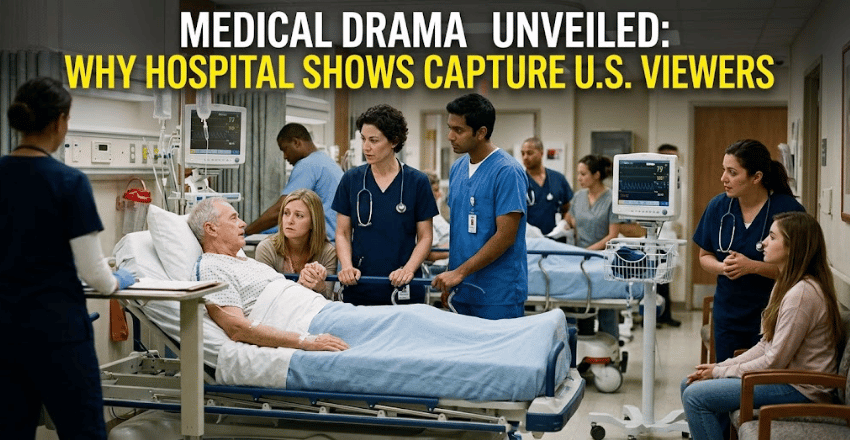
Medical stories begin with stakes audiences understand quickly. Someone is sick, injured, frightened, or waiting for an answer. Viewers don’t need extensive background before understanding why the outcome matters.
Hospitals also bring different people into one setting naturally. A single episode can involve children, parents, workers, retirees, specialists, and emergency patients. Writers can introduce new stories without rebuilding the fictional world each week.
The setting balances familiarity and surprise. Audiences recognize the emergency room, operating room, and patient bed. Yet every new diagnosis or personal crisis can change an episode’s direction.
PBS describes medical television as a long-standing American genre that blends hospital realism with ensemble storytelling. Its overview traces that appeal from early doctor programs through influential series such as ER.
9 Hospital Shows That Help Explain the Genre
Different series emphasize different parts of hospital storytelling. Some focus on realism, while others favor mysteries, romance, comedy, or character development. These nine examples show how flexible the format can be.
| Show | What it demonstrates about the genre |
|---|---|
| ER | Fast emergency-room storytelling and a large ensemble cast |
| Grey’s Anatomy | Long-running relationships mixed with surgical cases |
| House | Diagnostic mysteries built around an unconventional central doctor |
| Scrubs | Comedy combined with serious patient stories and young doctors learning |
| Chicago Med | Ensemble hospital cases within a larger television franchise |
| The Good Doctor | Character-centered storytelling combined with surgical cases |
| St. Elsewhere | An influential ensemble approach to hospital television |
| The Pitt | Real-time emergency medicine and intense workplace pressure |
| General Hospital | The overlap between healthcare storytelling and serialized soap opera |
Lists of notable hospital television frequently include classics such as ER, Grey’s Anatomy, and House. More recent U.S. coverage has also highlighted The Pitt as a major contemporary entry.
The Pitt offers a useful example of how the format continues changing. Its episodes follow an emergency department through a compressed real-time structure. That approach puts workflow, staffing, patients, and emotional pressure into the same narrative engine.
Medical Realism Versus Television Entertainment
Hospital television can look convincing without functioning like a documentary. Writers may use realistic terminology, equipment, procedures, and professional roles. They still compress events because a television episode needs momentum and resolution.
Real medicine often involves waiting, repeated testing, consultations, paperwork, and uncertainty. Television can shorten those processes or combine several events into one storyline. Viewers should therefore treat fictional treatment scenes as entertainment rather than medical guidance.
Research has examined both the benefits and limitations of these portrayals. Medical programs can raise questions about ethics, communication, and professional behavior. Yet dramatic requirements can also distort procedures, timelines, and outcomes.
This tension can make hospital stories more interesting, not less useful. Viewers can enjoy the suspense while recognizing that fictional medicine has different goals. Accuracy matters, but storytelling remains the program’s main purpose.
How to Pick the Right Hospital Series for Your Mood
Not every doctor show creates the same experience. Choosing by tone often works better than choosing by popularity alone. Start with the kind of story you already enjoy elsewhere.
* Choose ER or The Pitt if you prefer urgent pacing and emergency-room pressure. * Try House if mysteries and difficult diagnoses interest you. * Pick Grey’s Anatomy if continuing relationships matter as much as patient cases. * Watch Scrubs if you want comedy alongside emotional medical stories. * Explore older series if you enjoy seeing how television conventions changed over time.
Current recommendation pages show how broad the category has become. Recent roundups cover traditional dramas, medical comedies, docuseries, and newer hospital programs.
Getgoodread readers can also browse the site’s Entertainment section for more television and celebrity coverage. Readers interested in the healthcare side can explore the Health section. The site’s Amanda Bynes entertainment profile offers another example of its broader screen-culture coverage.
How the Genre Changed Over Time
Televised hospital stories appeared during the early decades of television. Early programs often emphasized authoritative doctors and individual medical cases. Later series expanded the focus toward large staffs, institutional pressures, and private lives.
That shift made the hospital a recurring social environment rather than a simple backdrop. Patients could drive one episode, while staff relationships carried stories across seasons. Modern programs often move between both levels within minutes.
Academic work on the genre describes a similar evolution. Researchers have studied changes in protagonists, settings, medical representation, and personal storylines across decades of television.
The format also continues to absorb ideas from other genres. A hospital show can contain romance, comedy, mystery, workplace drama, or social commentary. Medicine provides the structure while the tone can change significantly.
Do Medical Shows Affect How People Think About Healthcare?
Television can influence what viewers expect hospitals to look and feel like. Repeated fictional images may shape assumptions about emergency care, doctors, treatment, and patient outcomes. That influence doesn’t mean viewers automatically believe everything they see.
Researchers have studied how fictional medicine presents clinical practice and public-health issues. Some work also examines its use in healthcare education and discussions of professional behavior.
The safest viewing approach is simple. Enjoy the characters and cases as fiction, but use qualified medical sources for personal health decisions. A convincing scene is not evidence that a treatment fits a real patient.
Why the Formula Keeps Surviving
Few workplaces offer such an immediate range of human experiences. Birth, recovery, fear, grief, conflict, and hope can appear within the same fictional building. That gives writers a renewable source of stories.
The genre also supports both episodic and long-form viewing. A patient case can provide closure before the credits. Staff relationships can continue for months or years.
New productions can therefore change the style without abandoning the basic formula. Real-time storytelling, serialized romance, diagnostic mysteries, and comedy can all fit inside it. That flexibility helps explain why hospital television keeps returning.
Frequently Asked Questions
What is a medical drama?
A medical drama is a fictional television or film genre set in healthcare settings and focused on medical work. Stories commonly involve doctors, nurses, patients, diagnoses, emergencies, and ethical choices. Most series also develop the personal lives of recurring characters.
Are hospital TV shows medically accurate?
Accuracy varies between productions and episodes. Programs may use consultants, realistic terminology, and recognizable procedures while compressing time for storytelling. You shouldn’t use a fictional scene as personal medical advice.
Why do people enjoy doctor shows?
The setting creates immediate emotional stakes and understandable goals. Viewers can follow a new patient problem while becoming attached to returning characters. Mystery, urgency, relationships, and difficult choices provide several sources of tension.
Is Grey’s Anatomy the same type of show as House?
Both use medicine as a central storytelling device, but they emphasize different things. Grey’s Anatomy leans heavily on relationships and ongoing character arcs. House builds many episodes around diagnostic puzzles and its central physician.
What newer hospital series should viewers know?
The Pitt became a prominent recent U.S. example after its 2025 debut. Its real-time structure follows an emergency department during a demanding shift. Recent TV guides often list it alongside established hospital series.
The Last Word on Hospital Television
A medical drama works because healthcare creates stories with clear stakes, uncertainty, and human emotion. The genre can support mysteries, relationships, humor, ethical questions, and intense workplace stories. Decades of successful series show how many forms that basic idea can take.
New viewers don’t need to start with the longest or most famous series. Pick the tone that matches what you enjoy, then explore related shows from there. Getgoodread’s entertainment coverage can help you continue discovering television stories, personalities, and popular culture.

